
Across Borders and Practices: Reflections from the DDD
Text by Chandra Grangean
I was invited with my collective Les Idoles by the Biennale de la Danse de Lyon to take part in the Visiting Artist Programme at the DDD – Festival Dias Da Dança in Porto. For me it was really important to be part of this festival, originally created by Tiago Guedes, who is now the director of the Biennale de la Danse in Lyon.
From the moment I arrived, I joined the VAP group as well as João, Vera and Drew for a visit of the Teatro Rivoli Municipal do Porto, a theatre that holds a strong place in Porto’s cultural and political history, originally opened at the beginning of the 20th century and having gone through different transformations linked to Portugal’s political shifts, from dictatorship to democratic transition, and today standing as one of the major cultural institutions in the city, deeply connected to questions of programming and access to culture.
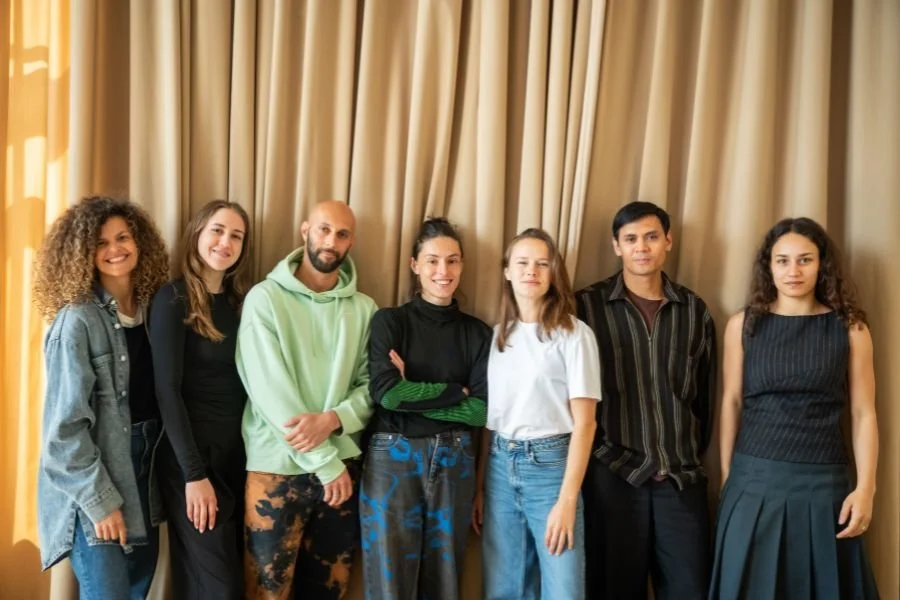
João, Vera and Drew welcomed us with a lot of generosity and João took the time to guide us through the building in a very detailed and engaging way, showing us all the spaces, backstage areas and technical rooms, which made this visit feel like a real entry point into the festival itself, because it already placed everything within a history, a place, and a political context. We also took time to introduce ourselves, and the encounter with the other VAP artists was, for me, one of the most important parts of the programme, because it very quickly opened up conversations about our different realities as artists depending on the countries we come from, the working contexts we operate in, and the conditions of production we deal with on a daily basis, with Guillem (Brussels), Daria (Ukraine), Inaja (Denmark), Jens (Norway), Sarah (Malta) and Katerina (Albania), all bringing very different but very generous perspectives.
These discussions also naturally moved towards more concrete questions about how art is supported or sometimes censored depending on political and economic contexts, and we spoke a lot about what it actually means to make a living from art in different countries, what systems exist or don’t exist, what kinds of support structures are in place or completely missing, and more specifically the intermittent worker status in France, as well as more broadly the fragility or freedom that each context produces for artistic practice. This became one of the strongest aspects of the programme for me, because beyond the official framework, it was really all these informal moments, these conversations around our practices, our networks, our references and our ways of working that felt the most alive, and I genuinely feel that these exchanges will continue to circulate and nourish the way we think about our practices and how we continue to develop and carry our projects.
During the festival, we saw two to three performances per day by Portuguese and international artists, and we were particularly moved by Repertório N.1 by Davi Pontes & Wallace Ferreira, as well as Tender Riot by Ana Rita Xavier, Daniel Conant, Madison Pomarico, Andy Pomarico, Jonas Friedlich, Maurícia Barreira Neves and Belisa Branças, both pieces being rooted in collective processes that were very present in the way the works were constructed and performed, with a strong sense of shared attention, presence and collective intelligence on stage. What really stood out for me in Repertório N.1 was the relationship to the audience, because there is a very subtle but constant game of listening and timing between the performers themselves, but also with what is happening in the room, with the reactions, silences and rhythms of the audience becoming part of the piece, so that each performance slightly shifts depending on the collective dynamic of that specific moment, which resonates strongly with my own practice and this idea that a performance is never fixed but always shaped by what is happening in the space and with the people present.
We also discovered the work of Luísa Saraiva (Agora Baixou o Sol), Wura Moraes (Reverberações), Catarina Miranda (FΛRSΛ), Ana Rita Xavier & Daniel Conant (Tender Riot), Chiara Barti (Heat Island), Ana Rita Teodoro (Sonhos Comuns) and Diana Niepce (Hornfuckers), which offered a wide range of very different choreographic and performative approaches across the programme.
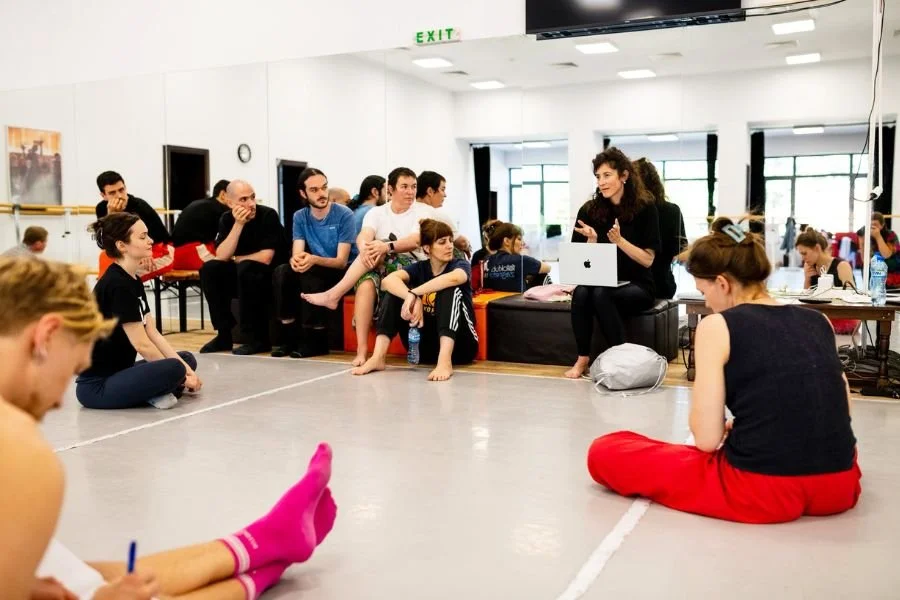
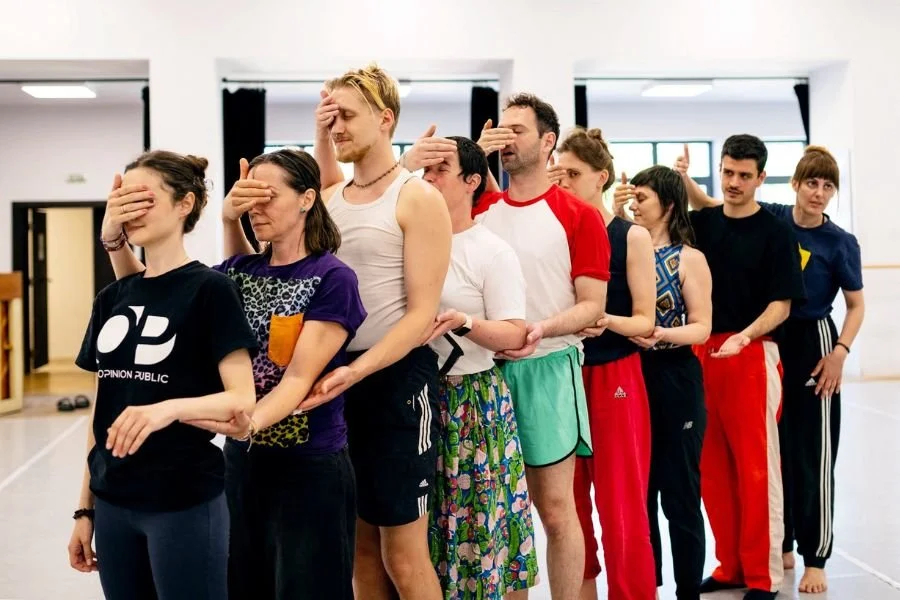
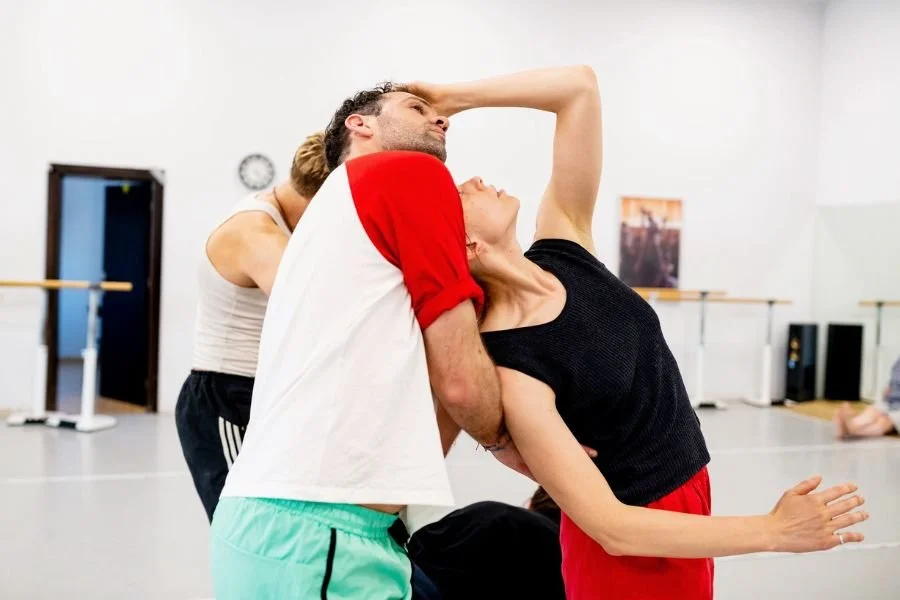
We also had the opportunity to meet Davi Pontes and Wallace Ferreira during a workshop, which allowed us to enter more deeply into their practice and artistic engagement, especially around Repertório N.3 and the idea of choreography as something constantly reactivated rather than fixed, with Repertório N.3 being based on jumping, repetition and endurance, and relying on very precise codes, especially in the use of gaze and arms, which function as live cues between performers and allow the choreography to be constantly adjusted in real time. Because the work is built in pairs, it also created many encounters with the VAP artists and the dancers from Porto, and it became another way of meeting people, through movement rather than through words, with three hours of continuous jumping which, honestly, was extremely physical and left our calves very much alive afterwards.
These four days in Porto were also an opportunity to discover the city and to spend time together outside the festival framework, and during that period there was also a Vivian Maier exhibition that I visited, as well as the Museu de Arte Contemporânea de Serralves, which really stood out as a very singular and inspiring place and also opened another perspective on how contemporary art and culture are supported and made accessible in Portugal.
I am very grateful to have met all these people and to have discovered this festival through such a human and open perspective, with a very warm welcome throughout the stay, and I want to especially mention Charline from the Biennale, who was very helpful in organising everything, as well as Vera from DDD and Tanguy from MAD, who were very present and supportive during the whole festival. It is a very particular experience to take part in a festival as a “festival artist”, without being involved in programming or production, and simply being able to fully experience the artistic encounters it offers, and for me the encounter with the VAP artists remains one of the most important parts of this experience, because real connections were created and some of them are still continuing today.
Thank you very much!